Why Are Diamond Deburring Brush Filaments the Preferred Choice for Precision Surface Finishing?
Deburring is a critical step in manufacturing – removing sharp edges and burrs improves safety, quality, and component performance. Traditional methods often struggle with consistency and tool life, especially on hard materials. Diamond Deburring Brush Filaments from WINGS offer a high‑performance alternative, combining synthetic diamond grit with durable nylon filaments to deliver efficient, reliable deburring on metals, ceramics, and composites. This article examines the technical specifications, abrasive options, and real‑world applications that make these filaments a smart choice for engineers and toolmakers.
The Deburring Challenge – Why Conventional Tools Fall Short?
Burrs and sharp edges are inevitable by‑products of machining, cutting, and forming processes. They can affect part assembly, cause injury, and lead to premature failure in service. Traditional deburring methods – manual filing, grinding wheels, or abrasive discs – often produce inconsistent results, generate heat, and wear out quickly, especially on hardened steel, titanium, or superalloys.
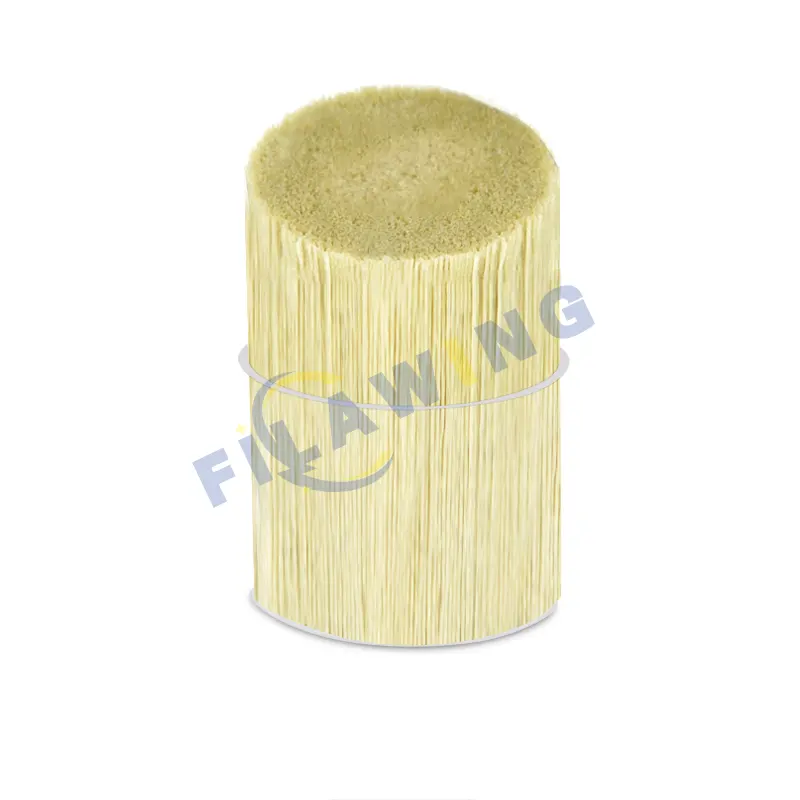
Diamond Deburring Brush Filaments from WINGS address these issues by embedding synthetic diamond particles into strong, flexible nylon filaments. When formed into brushes, these filaments conform to complex contours, effectively removing burrs without damaging the workpiece surface. The result is a faster, more uniform deburring process with longer tool life – ideal for high‑volume production environments.
Technical Specifications and Abrasive Options
The following table summarises the key parameters for Diamond Deburring Brush Filaments as manufactured by WINGS (FILAWING INDUSTRY CO., LIMITED).
| Parameter | Specification |
| Filament Material | Nylon (PA6, PA610, PA612 series) |
| Abrasive Type | Synthetic diamond grit (supplied by Henan Huanghe Whirlwind Co., Ltd.) |
| Grit Sizes Available | 36, 46, 60, 80, 120, 180, 240, 320, 500, 600, 800, 1000 |
| Abrasive Loading | 15% – 25% (by weight, adjustable per application) |
| Filament Diameter | 0.3 mm – 1.8 mm |
| Colour | Natural (can be customised upon request) |
| Brush Forms | Disc brushes, cup brushes, end brushes, or custom shapes |
| Typical Applications | Engineering, aerospace, automotive, turbine components, tooling inserts, medical devices |
Why Diamond Grit Makes the Difference?
Diamond is the hardest known material, making it exceptionally effective for cutting and abrading hard surfaces. Unlike conventional abrasives (aluminium oxide or silicon carbide), diamond grit maintains its sharpness for much longer, reducing the frequency of brush changes and improving process consistency.
WINGS sources its diamond grit from Henan Huanghe Whirlwind Co., Ltd. – one of the world’s largest synthetic diamond manufacturers, with an annual output of 2.4 billion carats. This partnership guarantees a reliable supply of high‑quality grit, ensuring that each filament delivers consistent cutting performance. The nylon base material – available in PA6, PA610, and PA612 grades – provides flexibility and resilience, allowing the brush to adapt to irregular surfaces while maintaining sufficient stiffness for effective deburring.
Manufacturing Excellence – German Technology, Chinese Efficiency
WINGS (FILAWING INDUSTRY CO., LIMITED) has been a professional manufacturer of abrasive nylon filaments since 2006. In 2010, the company imported a complete automatic production line and technology from Germany, ensuring consistent quality and high output. Today, the factory spans over 3,000 square metres and operates three filament production lines plus a bristle‑cutting machine line, with a comprehensive quality control system in place.
The company collaborates with well‑known domestic raw material suppliers to ensure resource quality, and its products are sold across China and exported to Europe, America, Southeast Asia, South Africa, and Brazil. With a strong focus on customer requirements, WINGS continuously improves its products through technological upgrades and raw material innovations – staying competitive in a demanding global market.
Versatile Applications Across Industries
Diamond Deburring Brush Filaments are used to manufacture a wide range of brush tools for surface and edge deburring in many sectors:
• Aerospace – Deburring turbine blades, engine components, and structural parts made of superalloys and titanium.
• Automotive – Edge finishing of gears, shafts, brake components, and castings to improve durability and reduce noise.
• Engineering & Tooling – Cleaning and deburring of precision dies, moulds, and cutting inserts.
• Medical devices – Smoothing of surgical instruments and implant surfaces where sharp edges are unacceptable.
• Metalworking – General deburring of stamped, punched, or machined parts in steel, aluminium, and copper alloys.
• Ceramics and composites – Gentle but effective edge finishing without causing chipping or delamination.
Customisation and Technical Support
Every deburring application is unique, which is why WINGS offers flexible customisation:
• Grit selection – From coarse (36 grit) for aggressive stock removal to fine (1000 grit) for polishing and finishing.
• Abrasive loading – Choose between 15% and 25% diamond concentration to balance aggressiveness and brush life.
• Filament diameter – Fine diameters (0.3 mm) for intricate contours; larger diameters (1.8 mm) for heavy‑duty applications.
• Brush shape – Disc, cup, end, or bespoke configurations to fit your machine and part geometry.
• Colour – Natural as standard, but custom colours can be arranged for branding or process identification.
The technical team at WINGS provides application advice and sample testing to ensure you achieve optimal results before placing volume orders.
Frequently Asked Questions
Q: What materials can these filaments deburr effectively?
A: They are highly effective on ferrous and non‑ferrous metals (steel, stainless steel, aluminium, copper, titanium), as well as ceramics, composites, and plastics. Diamond grit handles hard materials that wear out conventional abrasives quickly.
Q: How does the abrasive loading affect performance?
A: Higher loading (25%) provides more cutting edges per filament, increasing aggressiveness and productivity. Lower loading (15%) offers a finer finish and longer brush life for lighter deburring or polishing.
Q: Are these filaments suitable for automated deburring systems?
A: Yes, they are designed for use in CNC machines, robotic systems, and dedicated brush deburring machines. The consistent quality of WINGS filaments ensures predictable results in automated processes.
Q: What is the typical lifespan of a brush made from these filaments?
A: Lifespan depends on the application, pressure, and speed. In general, diamond‑filled nylon brushes last significantly longer than conventional abrasive brushes – often several times longer – reducing downtime and tooling costs.
Q: Can I get a sample for testing?
A: Yes, WINGS offers sample filaments or trial brushes for customers to test on their own parts. Contact the sales team to discuss your specific needs.
Q: What certifications does WINGS hold?
A: The company operates a complete scientific quality control system and complies with international standards for abrasive products. Specific certifications can be provided upon request.
Conclusion
Diamond Deburring Brush Filaments from WINGS combine high‑quality diamond grit, durable nylon, and precision manufacturing to deliver superior deburring performance across a broad spectrum of industries. With a wide grit range, customisable specifications, and a commitment to quality backed by German‑imported production lines, WINGS provides reliable solutions for manufacturers seeking efficiency, consistency, and long tool life. Ready to upgrade your deburring process? Contact WINGS today for technical consultation, sample testing, or a custom quotation – we look forward to helping you achieve better finishing results.