Alumina Ceramic Labware: Can High-Purity Engineering Ceramics Really Outperform Metals in Corrosive, High-Temperature Environments?
In laboratories and industrial facilities worldwide, a quiet but significant materials shift is underway. Glass breaks under thermal shock. Stainless steel corrodes in acidic environments. Plastics soften at elevated temperatures and absorb solvents. Engineers and lab managers facing these limitations are increasingly turning to a material family once considered too brittle or too expensive for routine use: alumina ceramic labware.
The discussion around alumina ceramic labware has intensified on technical forums, procurement networks, and industry peer groups. The questions being asked are practical rather than theoretical: Can ceramic crucibles survive repeated thermal cycling without cracking? Are alumina tubes truly inert when exposed to aggressive chemical vapors? Does the upfront cost of ceramic labware justify itself through extended service life compared to metal alternatives?
Engineering Ceramic (China) Ltd. (EC) has been answering these questions for more than three decades. With over 30 years of experience in the ceramic industry, EC specializes in high-purity alumina protection tubes, silicon carbide components, Alsint products, KER710 thermowells, ceramic and mechanical seal products. These impervious, fine-grained ceramic products are used in applications requiring protective atmospheres, corrosive environment resistance, high-temperature stability, and contamination-free processing. The company serves the ceramics, metallurgy, chemical, petrochemical, power generation, waste processing, and glass making industries—sectors where equipment failure is measured in production losses of thousands per hour.
Why Alumina Ceramic Labware Is Gaining Attention in Technical Communities
A review of discussion threads on platforms such as ResearchGate, Lab Manager forums, and industrial procurement networks reveals recurring themes about alumina ceramic labware. The conversations are not about whether ceramics work—their properties are well-documented. The debates center on value, application fit, and supplier reliability.
Topic 1: "How many thermal cycles can an alumina crucible really survive?"
This question appears frequently in ceramics and materials science forums. The concern is legitimate: thermal shock resistance is a limiting factor for all ceramic materials, and users have experienced failures when moving crucibles directly from high-temperature furnaces to room-temperature benches.
The answer depends on material purity, grain structure, and wall thickness. High-purity alumina ceramic labware (typically 99.5% to 99.8% Al₂O₃) offers significantly better thermal shock resistance than lower-purity alternatives because the reduced glass phase content minimizes differential expansion between grains. EC's material selection guidance considers peak temperature, chemical environment, and abruptness of temperature change as the three critical parameters for each application.
Topic 2: "Is alumina ceramic truly chemically inert for my application?"
For laboratories handling aggressive reagents—hydrofluoric acid excluded, which attacks most silicates and aluminas—alumina ceramic labware provides exceptional chemical resistance. The fine-grained, impervious structure of EC's alumina products prevents liquid penetration that would corrode metals or degrade porous ceramics.
The practical implication: crucibles, tubes, and labware items that contact molten metals, aggressive fluxes, or corrosive vapors maintain their surface integrity and do not contaminate samples. For analytical chemistry applications requiring trace metal analysis, alumina ceramic labware contributes minimal background contamination compared to metallic alternatives that may leach iron, nickel, or chromium.
Topic 3: "What is the real cost difference between ceramic and metal labware?"
First-cost comparisons show alumina ceramic labware priced higher than equivalent stainless steel or nickel alloy components. However, total cost of ownership discussions on procurement forums consistently reach the same conclusion: in high-temperature, corrosive, or abrasive applications, ceramic outlasts metal by factors of 3 to 10 times.
A stainless steel thermowell in a chemical process stream may require replacement every six months due to pitting corrosion. An EC alumina ceramic thermowell in the same service may operate for five years or more. The initial price premium disappears when maintenance labor, process downtime, and replacement part costs are factored into the calculation.
Product Categories: From Standard Labware to Custom Engineered Components
EC's alumina ceramic labware and related product lines span standard catalog items and fully custom engineered solutions.
High-Purity Alumina Protection Tubes
Alumina protection tubes serve as sheaths for thermocouples and other sensing elements in aggressive environments. The tube isolates the sensor from chemical attack while conducting temperature with minimal lag. EC's high-purity alumina versions withstand peak temperatures appropriate to the specific grade, with material selection based on exact operating conditions.
Crucibles and Labware Items
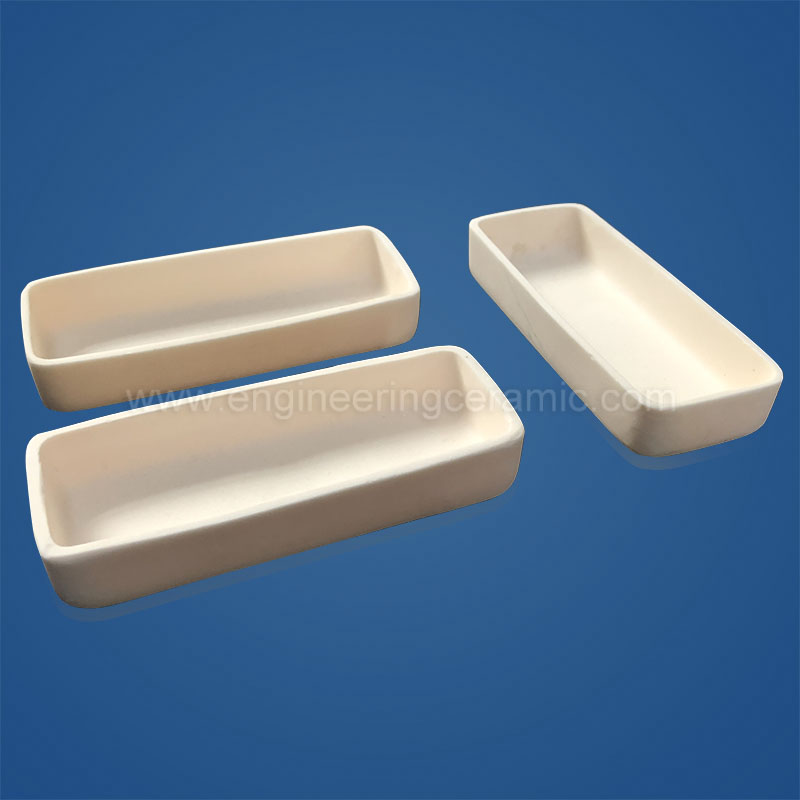
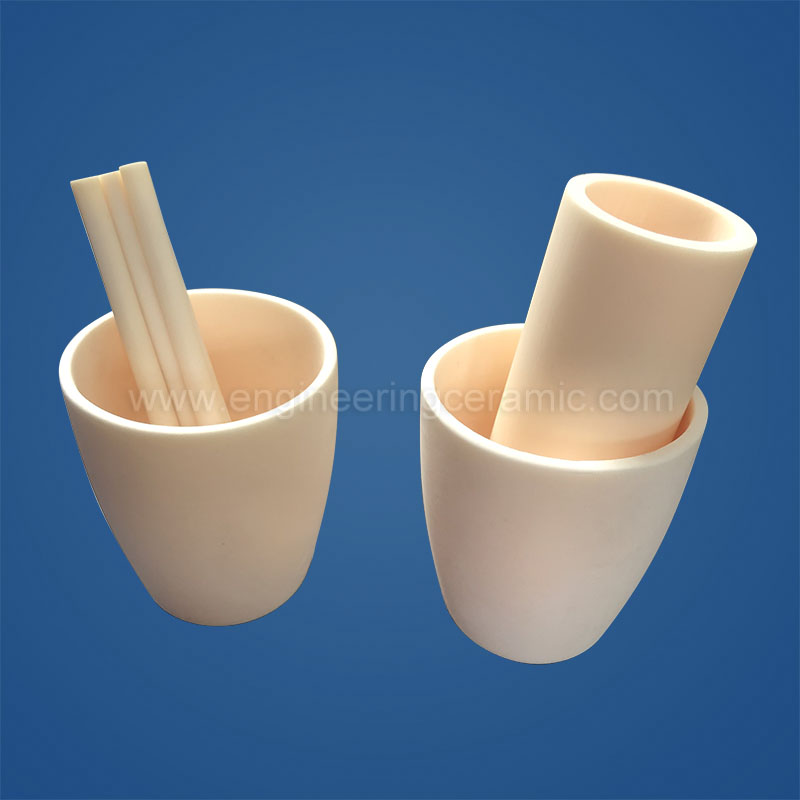
Standard alumina ceramic labware from EC includes crucibles in various sizes and shapes, rods, tubes, and laboratory vessels. The impervious, fine-grained structure prevents absorption of molten materials, making crucibles suitable for precious metal melting, ash determination, and high-temperature synthesis.
Thermowells for Process Industries
In petrochemical, power generation, and chemical processing, thermowells protect temperature sensors from process fluids. EC's ceramic thermowells (including the KER710 grade) provide corrosion resistance that metal thermowells cannot match in acidic or chloride-rich environments. The material selection depends on peak temperature, chemical environment, and thermal cycling frequency.
Custom Engineered Components
EC maintains significant capability for producing customized engineered products beyond standard catalog offerings. For equipment manufacturers and specialized process facilities, this means ceramic components designed to specific dimensional, tolerance, and material property requirements.
An experienced engineer from EC can assist with material selection and component design, addressing questions such as:
- Which alumina purity is appropriate for the intended peak temperature?
- What wall thickness provides adequate mechanical strength without excessive thermal mass?
- How should the component be supported to accommodate differential thermal expansion?
Material Selection: Matching Ceramic Grade to Application
Not all alumina ceramic labware is identical. EC offers multiple material grades because different applications impose different demands.
High-Purity Alumina (99.5%–99.8%)
The highest-purity grades offer maximum chemical inertness, thermal stability, and high-temperature strength. Applications include semiconductor processing, analytical chemistry, and high-temperature furnace components where contamination cannot be tolerated.
Silicon Carbide (SiC)
For applications combining high temperature with mechanical abrasion or thermal shock, silicon carbide provides superior performance compared to alumina. EC's silicon carbide products serve industries where ceramic brittleness would limit alumina's applicability.
Alsint and KER710
These specialized grades represent EC's engineered ceramics for specific industrial applications. KER710 thermowells, for example, are formulated for process conditions where standard alumina may not provide adequate thermal shock resistance or chemical durability.
The material selection process at EC begins with operating parameters: peak temperature, chemical environment, and abruptness of temperature change. A material that performs perfectly at steady 1,200°C in a neutral atmosphere may fail rapidly during thermal cycling or in the presence of alkali vapors. EC's three decades of experience inform these material recommendations.
Industries Served and Application Examples
EC's alumina ceramic labware and engineered components reach across multiple heavy industries:
| Industry | Typical Applications | Why Ceramic Is Specified |
|---|---|---|
| Ceramics manufacturing | Kiln furniture, setter plates, firing tubes | High-temperature stability, dimensional accuracy, non-contaminating |
| Metallurgy | Thermowells, crucibles, ladle components | Corrosion resistance to molten metals, thermal shock tolerance |
| Chemical processing | Protection tubes, reaction vessels, seals | Chemical inertness, impervious structure, acid resistance |
| Petrochemical | Thermowells, catalyst support tubes | High-temperature strength, hydrogen attack resistance, chloride corrosion resistance |
| Power generation | Boiler sensors, emission monitoring ports | Sulfidation resistance, thermal cycling durability, long service life |
| Waste processing | Incinerator sensors, flue gas monitoring | Corrosion resistance to combustion byproducts, thermal stability |
| Glass making | Stirrers, delivery tubes, thermocouple sheaths | Non-wetting behavior, glass corrosion resistance, high-temperature strength |
Quality and Capability: Three Decades of Ceramic Focus
EC's core competency is ceramic technology. Unlike diversified manufacturers that treat ceramics as a minor product line, EC has maintained ceramic focus as its primary business for more than 30 years. The implications for buyers of alumina ceramic labware are meaningful:
Application engineering support : EC engineers understand the failure modes of ceramic components—thermal shock, chemical attack, abrasion, impact damage—and can recommend designs that mitigate these risks.
Size capability : The company produces components ranging from small laboratory crucibles to large-diameter protection tubes, serving both research-scale and production-scale users.
Cost-effective solutions : With three decades of manufacturing experience, EC has optimized production processes to deliver alumina ceramic labware that balances performance requirements against practical budgets.
For buyers evaluating suppliers of alumina ceramic labware, the combination of long industry tenure, broad material selection, and custom engineering capability distinguishes EC from competitors that offer only standard catalog items with no application support.