Aluminum Oxide Abrasive Filaments: Material Properties, Industrial Applications, and Selection Criteria
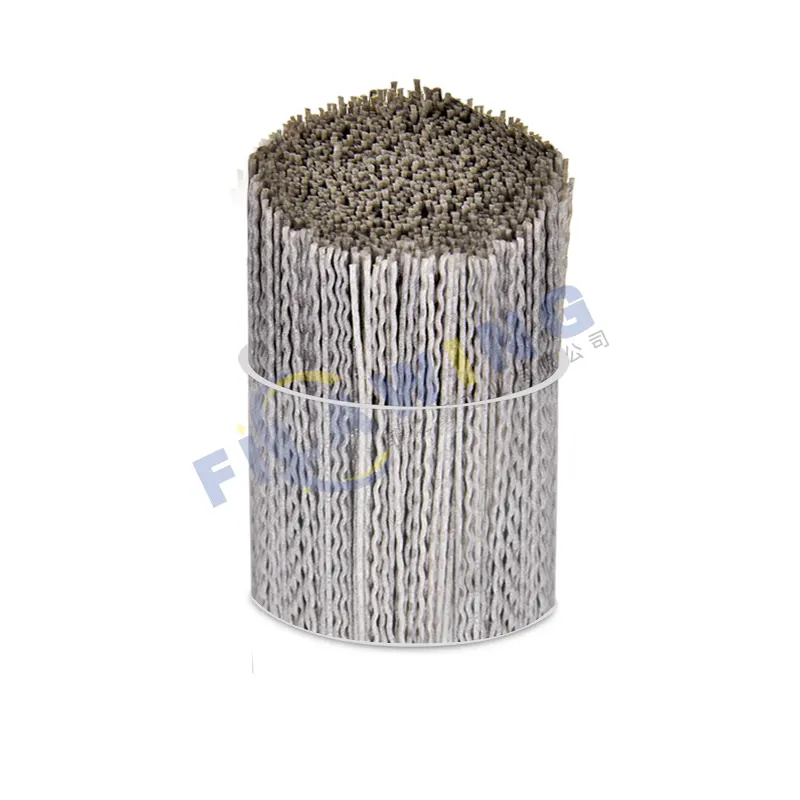
Aluminum oxide abrasive filaments are engineered brushing and surface-conditioning materials designed for precision deburring, edge radiusing, polishing, and surface finishing across metalworking, automotive, electronics, and composite manufacturing industries. Unlike conventional wire brushes or coated abrasives, these filaments combine flexible polymer carriers with embedded aluminum oxide abrasive grains, allowing controlled material removal with reduced surface damage and consistent finishing performance.
Because the abrasive particles are distributed throughout the filament structure, fresh cutting edges continue to emerge as the filament wears. This self-renewing characteristic improves service life, process consistency, and finishing accuracy in both automated and manual operations. Proper selection, however, requires understanding grit size, filament diameter, abrasive concentration, thermal resistance, brush geometry, and operating speed. This article examines the engineering characteristics of aluminum oxide abrasive filaments, explains their functional advantages, and outlines the critical considerations for industrial procurement and application matching.
Why Aluminum Oxide Abrasive Filaments Are Important
Aluminum oxide abrasive filaments occupy a critical role in modern precision finishing systems because they provide repeatable surface treatment while minimizing damage to sensitive workpieces. Their controlled flexibility enables operators to process complex geometries and hard-to-reach edges without excessive stock removal.
Influence on surface finish and dimensional control
The mechanical behavior of abrasive filaments directly affects final surface quality and dimensional accuracy. During operation, each filament flexes under rotational force while the embedded aluminum oxide grains perform micro-cutting actions against the workpiece surface. This allows gradual material removal rather than aggressive gouging.
Compared with traditional steel wire brushes, abrasive nylon filaments generate lower contact pressure and reduced heat concentration. In precision machining environments, this helps maintain edge tolerances within ±0.02mm to ±0.05mm after deburring operations. Additionally, the flexible cutting action produces smoother surface roughness values, commonly achieving Ra 0.4–1.6 μm depending on grit specification and operating speed.
Applications across manufacturing sectors
Aluminum oxide abrasive filaments are widely used in automated finishing lines, robotic deburring systems, CNC machining centers, and handheld power tools. In automotive manufacturing, they remove burrs from transmission housings, cylinder heads, and brake components without damaging machined surfaces. Aerospace suppliers use them for edge blending and composite trimming where dimensional stability is critical.
In electronics manufacturing, fine-grit filaments are applied to connector cleaning and oxide removal from conductive surfaces. Medical device manufacturers also utilize micro-abrasive filament brushes for polishing stainless steel surgical instruments and implant components requiring controlled surface textures.
Core Specifications of Aluminum Oxide Abrasive Filaments
The operational performance of abrasive filaments depends heavily on material composition, abrasive loading, filament geometry, and thermal durability. Small variations in these parameters can significantly affect cutting aggressiveness, wear rate, and process consistency.
Grit size, filament diameter, and abrasive concentration
The three most influential technical parameters are grit size, filament diameter, and abrasive grain distribution.
Grit size determines cutting aggressiveness and achievable surface finish. Coarse grades such as 46# or 60# provide rapid deburring and heavy oxide removal, while fine grades ranging from 240# to 1000# are intended for polishing and precision finishing applications.
Filament diameter influences stiffness and contact pressure. Larger diameters—typically 1.2mm to 1.5mm—deliver stronger cutting force and are suitable for aggressive deburring. Smaller diameters such as 0.3mm to 0.6mm offer greater flexibility for delicate components and intricate geometries.
Abrasive concentration also affects operational behavior. Higher grain loading increases cutting efficiency but may reduce filament flexibility. Lower concentrations improve conformability and reduce the risk of surface scratching on softer substrates.
Base polymers and thermal resistance
Most industrial abrasive filaments utilize nylon 6, nylon 66, or nylon 612 as the carrier material. High-performance grades may incorporate polyamide blends with enhanced heat stabilization.
Thermal resistance is a major consideration in high-speed rotary applications. Standard nylon abrasive filaments generally withstand continuous operating temperatures between 80°C and 120°C. Heat-stabilized variants can tolerate intermittent temperatures approaching 180°C without significant softening or loss of stiffness.
Moisture absorption must also be considered, particularly in humid production environments. Nylon-based filaments naturally absorb atmospheric moisture, which can alter flexibility and dimensional stability. Premium-grade formulations often include conditioning additives to minimize these effects.
Comparison of common abrasive filament configurations
| Configuration Type | Typical Diameter | Common Grit Range | Main Characteristics |
|---|---|---|---|
| Fine Flexible Filaments | 0.3mm – 0.6mm | 240# – 1000# | Precision finishing, polishing, low surface damage |
| General-Purpose Filaments | 0.6mm – 1.0mm | 80# – 240# | Balanced cutting and flexibility |
| Heavy-Duty Filaments | 1.0mm – 1.5mm | 46# – 80# | Aggressive deburring and edge radiusing |
| Heat-Resistant Industrial Grade | 0.8mm – 1.2mm | 60# – 320# | High-speed automated production environments |
Process Compatibility and Operational Evaluation
Successful integration of aluminum oxide abrasive filaments requires evaluating rotational speed, workpiece material, contact pressure, and cooling conditions. Improper operating parameters can reduce brush life or negatively affect surface quality.
Pre-operation assessment
Before implementation, technicians should verify compatibility between the abrasive filament specification and the substrate hardness. Aluminum, brass, plastics, and composite materials generally require finer grit selections and lower operating pressures, while hardened steels and cast iron components may require coarser grades with reinforced filament structures.
Rotational speed is another critical parameter. Excessive RPM generates heat buildup that accelerates polymer fatigue and abrasive shedding. Typical operating speeds range between 1500 and 4500 RPM depending on brush diameter and application intensity.
Machine rigidity and spindle alignment must also be checked to prevent uneven filament wear and inconsistent finishing patterns.
Common operational challenges
Several performance issues commonly arise from incorrect application matching.
Overly aggressive grit selections can leave visible scratch patterns or alter precision-machined dimensions. Conversely, excessively fine filaments may polish the surface without effectively removing burrs.
Heat accumulation represents another major concern in continuous automated systems. Prolonged exposure to elevated temperatures may soften the nylon matrix, reducing cutting efficiency and shortening service life.
Chemical exposure should also be evaluated carefully. Certain coolants and industrial solvents may accelerate polymer degradation, especially in lower-grade nylon formulations.
Compliance and industrial quality requirements
In regulated manufacturing industries, abrasive tools often must satisfy strict traceability and material consistency standards. Automotive and aerospace suppliers frequently require compliance with ISO 9001 quality systems and documented batch traceability for abrasive media used in critical finishing operations.
For electronics and semiconductor applications, low-contamination filament grades are preferred to minimize particulate transfer and electrostatic discharge risks during component processing.
Supply Chain, Manufacturing Quality, and Commercial Considerations
Selecting a reliable abrasive filament supplier involves more than comparing pricing. Buyers must evaluate manufacturing consistency, raw material quality, technical support capabilities, and long-term supply stability.
Evaluating manufacturer capability
Qualified manufacturers typically operate precision extrusion lines with computerized control systems to maintain consistent filament diameter and abrasive distribution. Production facilities should also perform regular tensile strength testing, bend fatigue analysis, and abrasive retention verification.
Advanced suppliers commonly use laser measurement systems and optical inspection equipment to monitor filament dimensional tolerances in real time. Consistency is especially important for robotic deburring systems where even small diameter variations can affect finishing accuracy.
Procurement teams should additionally verify raw material sourcing and request technical data sheets covering grit composition, tensile properties, moisture absorption rates, and recommended operating conditions.
MOQ, customization, and delivery cycles
Minimum order quantities vary depending on filament diameter, abrasive grade, and custom color requirements. Standard industrial grades may be available from stock, while specialized formulations generally require larger production runs.
Lead times for customized abrasive filaments commonly range from 20 to 40 production days depending on extrusion complexity and packaging specifications. Many suppliers also offer OEM branding, spool customization, and application-specific formulation development for industrial distributors and brush manufacturers.
Cost versus performance comparison
The abrasive filament market is segmented according to material quality, extrusion precision, and abrasive consistency.
| Market Category | Typical Price Level | Material Characteristics | Performance Features |
| Economy Grade | Low | Standard nylon with inconsistent grit dispersion | Shorter lifespan, variable cutting consistency |
| Industrial Grade | Medium | Controlled aluminum oxide loading with stable extrusion | Reliable deburring and finishing performance |
| Premium Engineering Grade | High | Heat-stabilized polymers with precision abrasive distribution | Extended service life, high process consistency |
| Specialized Technical Grade | Premium | Custom formulations for aerospace or electronics applications | Tight tolerances and contamination control |
Selection Strategy for Aluminum Oxide Abrasive Filaments
A structured selection process helps manufacturers optimize finishing efficiency while avoiding excessive tool wear or surface damage. Matching the correct abrasive filament to the target process improves both operational consistency and long-term production cost control.
Recommended selection workflow
The selection process should begin by identifying the workpiece material and the required finishing objective, such as deburring, edge rounding, oxide removal, or polishing.
Next, determine the necessary grit range and filament stiffness according to the target surface roughness and burr size. Heavy burr removal generally requires coarse grit and larger filament diameters, whereas precision finishing benefits from fine-grit flexible filaments.
The operating environment must then be evaluated, including spindle speed, coolant exposure, cycle duration, and thermal conditions. High-speed automated systems may require heat-resistant nylon grades to maintain stable performance under continuous operation.
Finally, buyers should confirm compatibility with the intended brush design, including disc brushes, cup brushes, wheel brushes, or custom CNC deburring tools.
Balancing productivity, durability, and cost
Aggressive abrasive filaments can improve short-term processing speed but may increase surface damage risk and accelerate tool consumption. Conversely, ultra-fine premium grades deliver superior finish quality at higher material cost and slower removal rates.
Industrial users must balance these factors according to production priorities. In high-volume manufacturing, investing in premium heat-stabilized abrasive filaments often reduces downtime and improves process consistency, ultimately lowering total operational cost despite higher initial purchase pricing.
Key Takeaways
- Aluminum oxide abrasive filaments provide controlled, repeatable deburring and finishing with lower surface damage than traditional wire brushes.
- Critical specifications include grit size, filament diameter, abrasive concentration, thermal resistance, and polymer composition.
- Proper operating speed and application matching are essential for maximizing tool life and maintaining dimensional accuracy.
- Heat-stabilized nylon carriers and precision abrasive distribution significantly improve performance in automated industrial systems.
- Supplier evaluation should include extrusion consistency, material traceability, tensile testing capability, and quality certification.
Frequently Asked Questions
What are aluminum oxide abrasive filaments used for?
They are commonly used for deburring, edge radiusing, polishing, oxide removal, and surface finishing in industries such as automotive, aerospace, electronics, and metal fabrication.
How does grit size affect performance?
Coarse grits remove material faster and are suitable for heavy deburring, while fine grits produce smoother finishes and are better for polishing or precision applications.
Why are nylon carriers used in abrasive filaments?
Nylon provides flexibility, fatigue resistance, and thermal stability while securely holding abrasive particles throughout the filament structure.
What is the advantage of abrasive filaments over steel wire brushes?
Abrasive filaments produce more controlled cutting action, reduce surface damage, generate less heat, and continuously expose fresh abrasive grains during wear.
How can I improve abrasive filament service life?
Use the correct operating speed, avoid excessive contact pressure, match grit size to the application, and select heat-resistant grades for continuous high-speed production environments.